USACE utilize Flexifloat SEP to make historical lift
Sault Ste. Marie, MI
Located on the St. Marys River, the Soo Locks allow ships to navigate between Lake Superior and the lower Great Lakes, the St. Lawrence Seaway, and international markets. Today, the Soo Locks accommodate an average of 10,000 ships per year, including 95% of the United States’ taconite (iron ore).
During War World II, the Soo Locks were critical to the war effort by linking the iron ore mines near Lake Superior to steel production in the lower Great Lakes. Large searchlights lit up the night skies and anti-aircraft guns reinforced by barrage balloons were positioned to intercept German aircraft. More than 7,300 soldiers were stationed at Fort Brady near the locks, and six Early Warning Radar Stations were constructed between Nakina and Armstrong, Ontario. Torpedo nets were also installed to protect this vital infrastructure.
In case the locks were damaged, spare miter gates were built and stored downriver where they were hidden on the bottom of the St. Marys River. By mid-1943 the War Department considered any German attack on the Soo Locks to be remote, and the spare miter gates remained out of site for over 80 years.
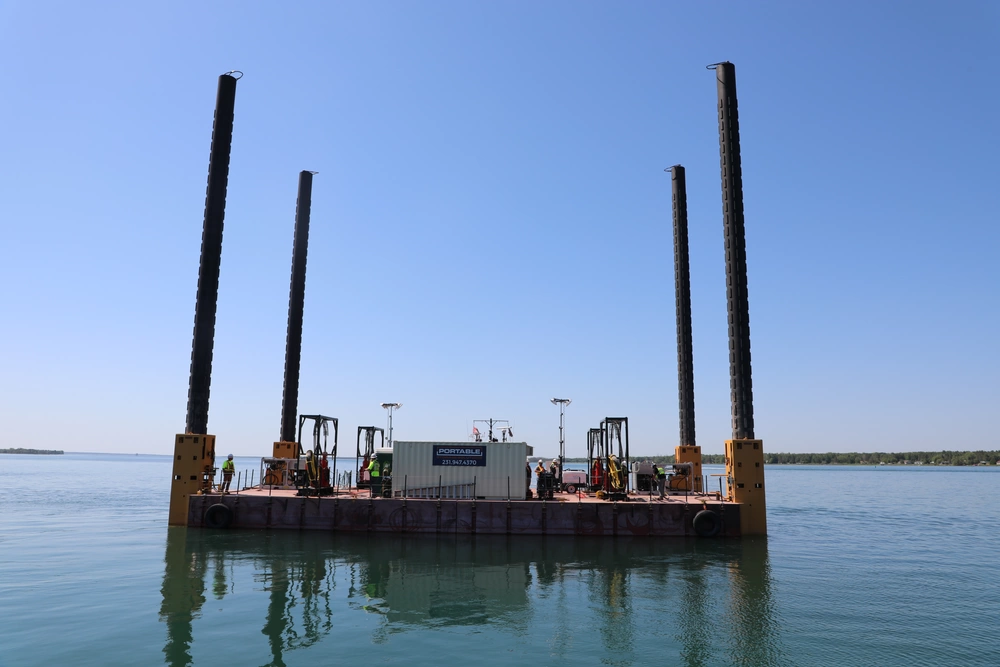
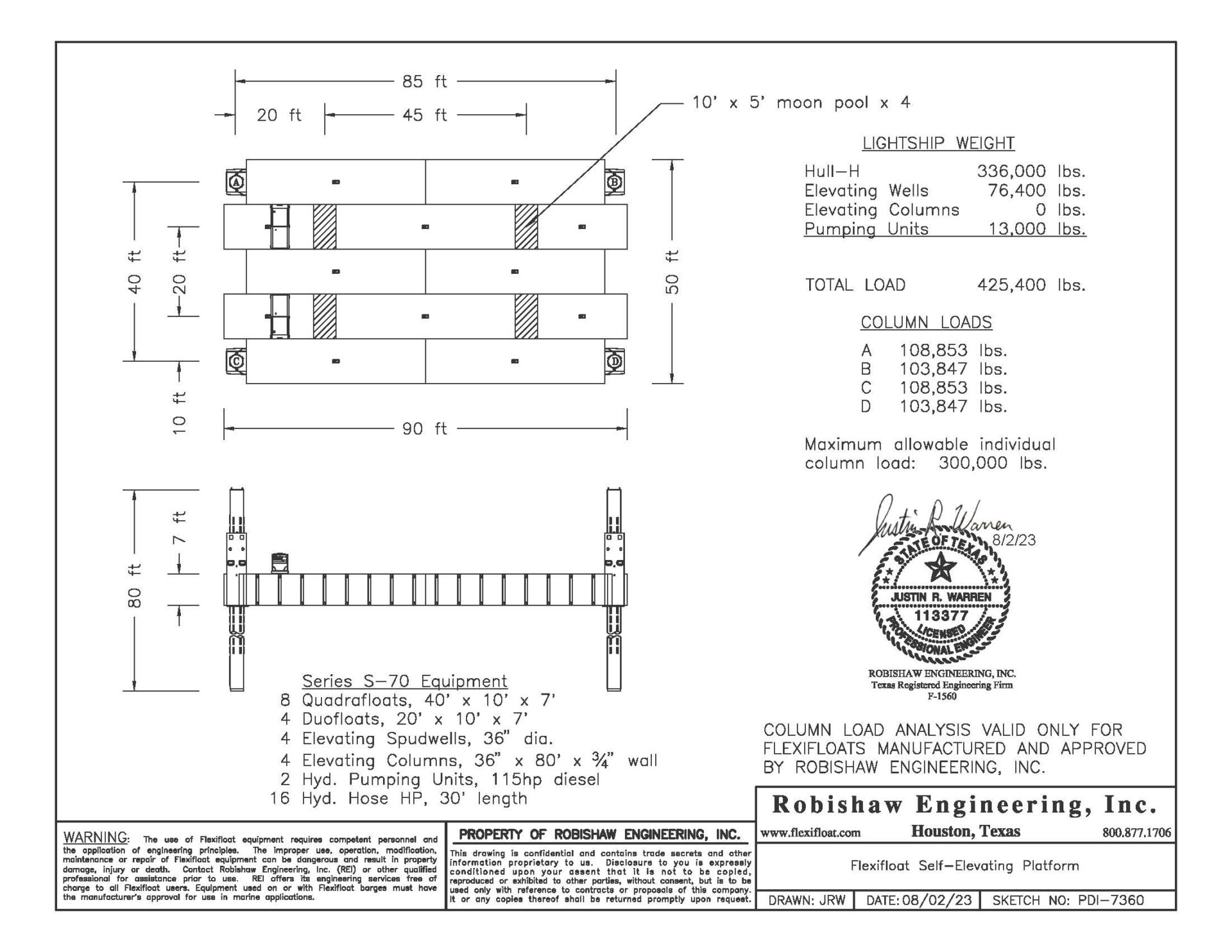
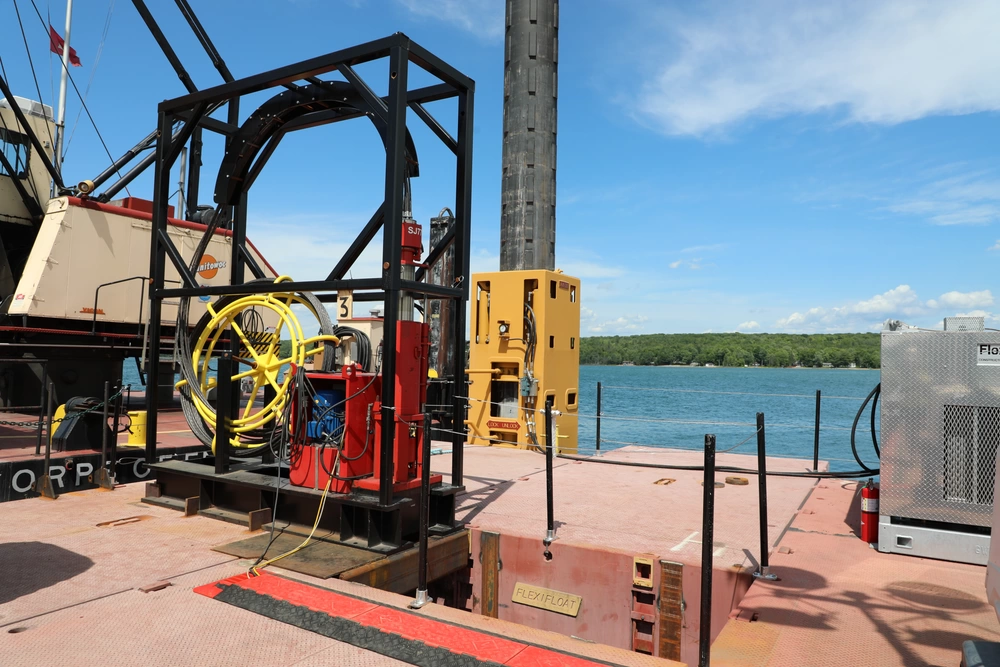
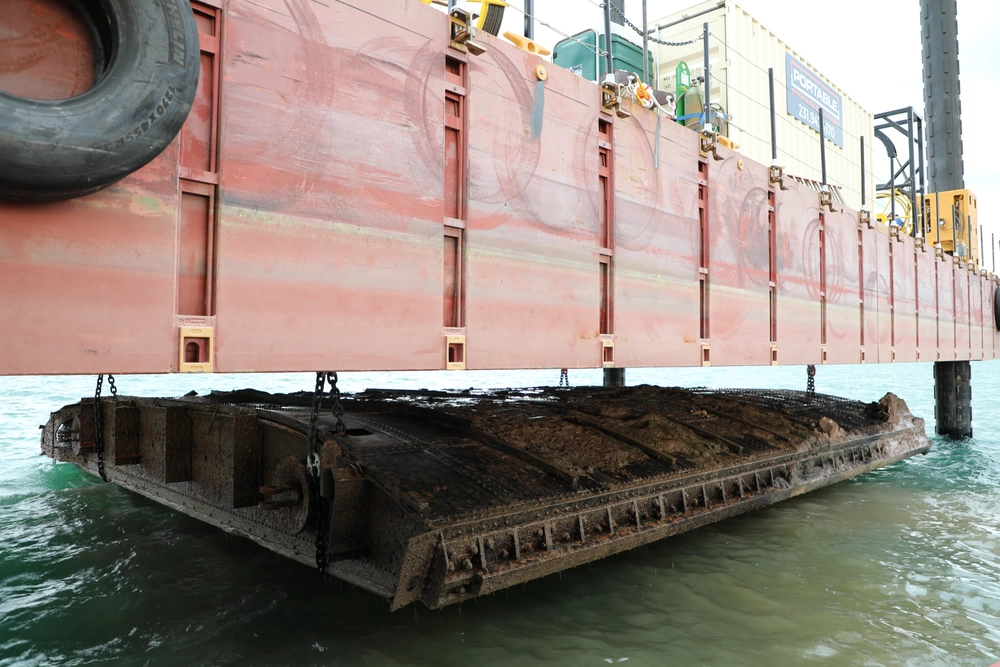
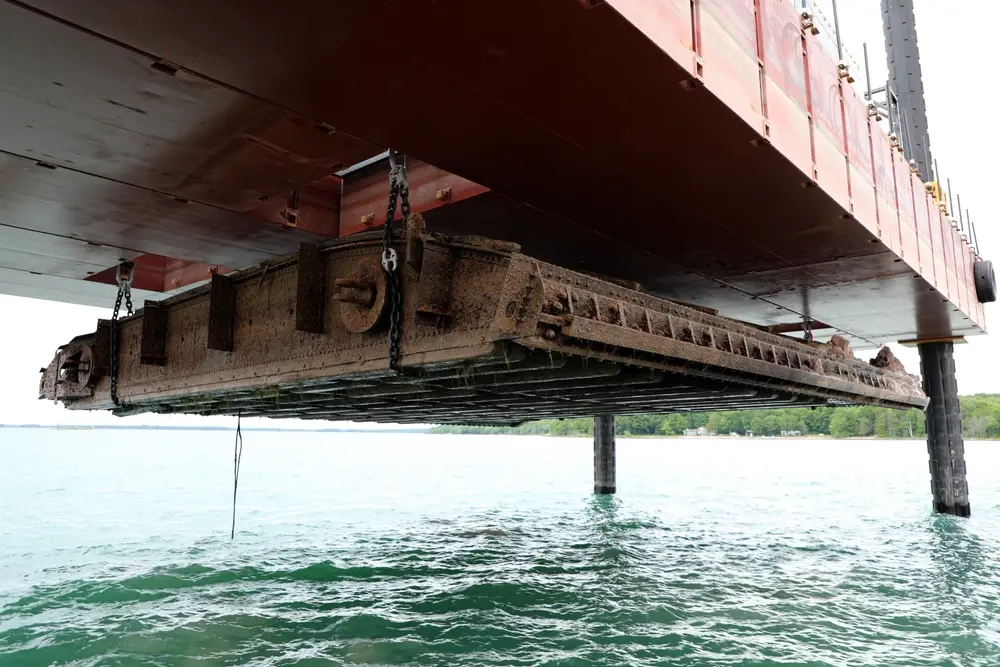
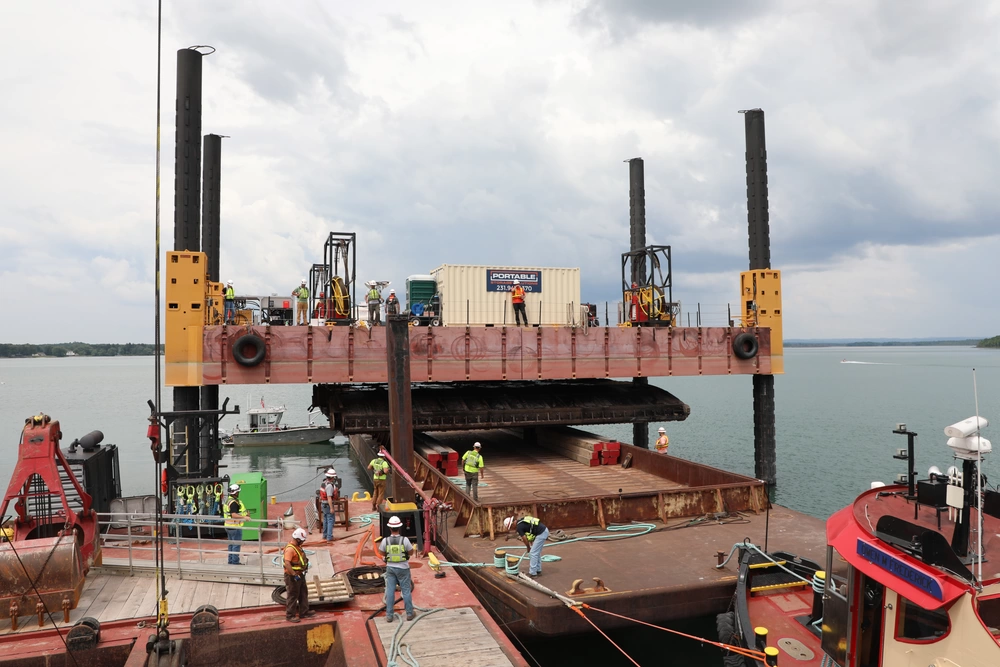
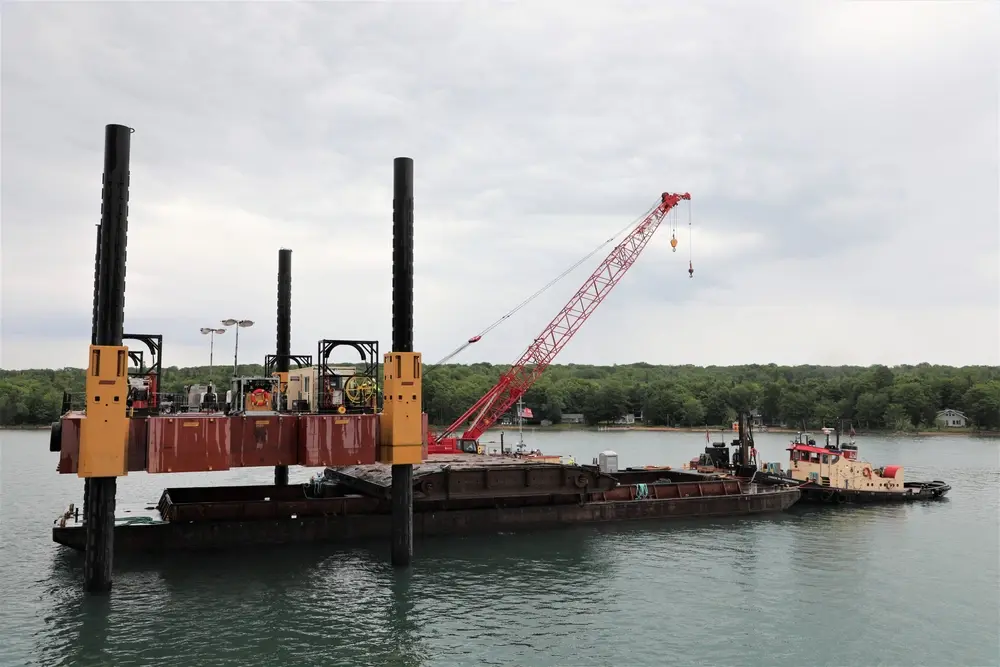
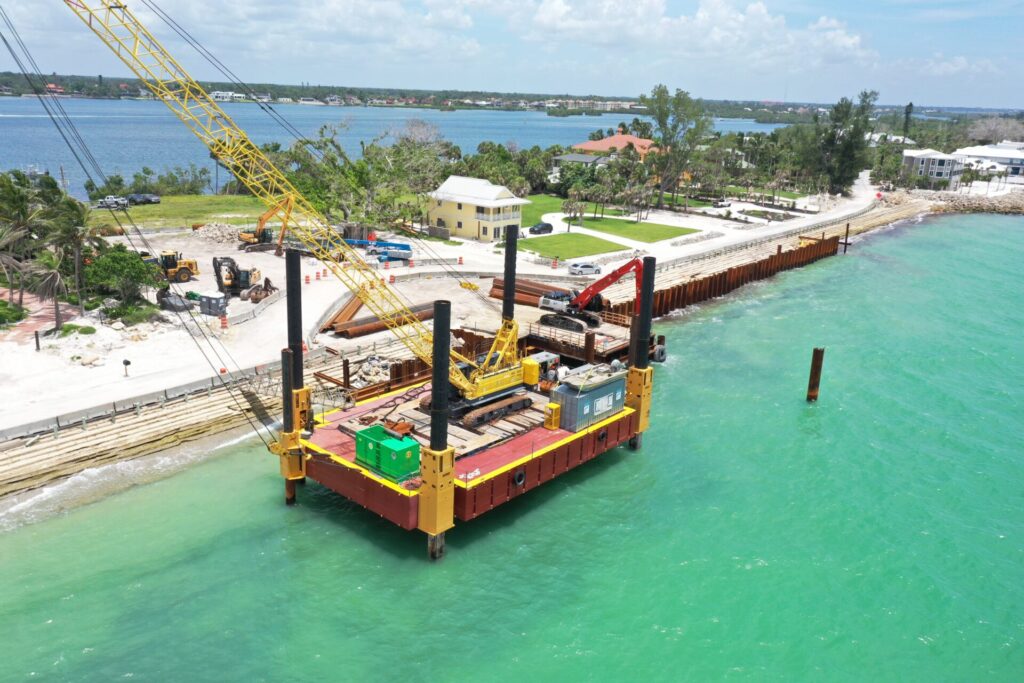
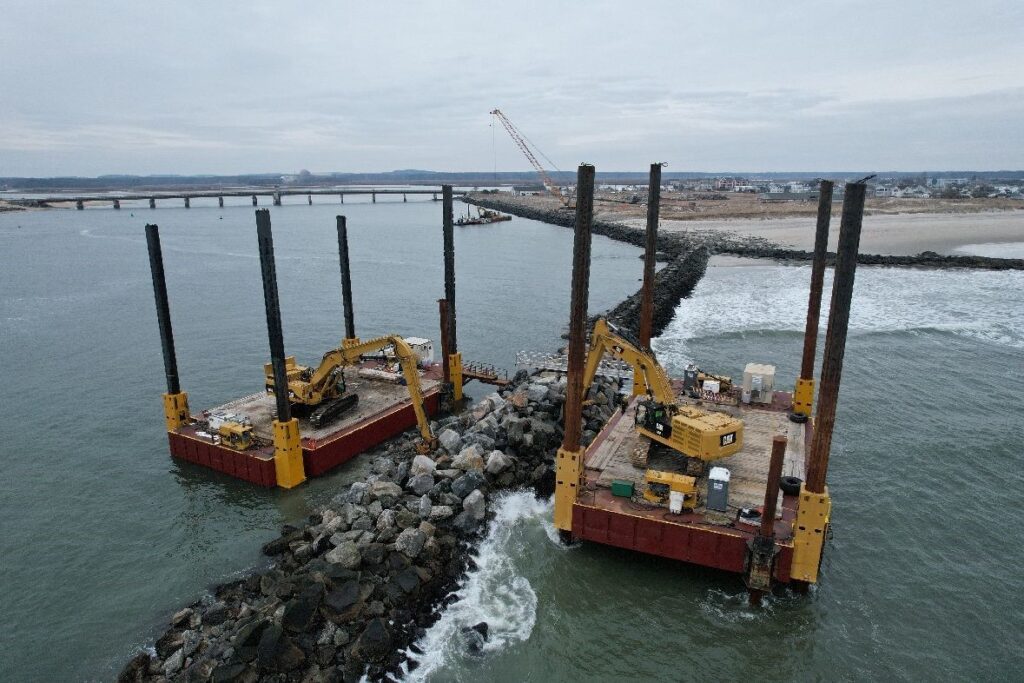
When construction began on a new larger lock, it deemed the spare gates obsolete. The U.S. Army Corp of Engineers was tasked with removing the locks and selected Robishaw Engineering’s Flexifloat Self-Elevating Platform (SEP) to lift the gates off the bottom of the St Marys River. The modularity of the Flexifloat sectional barges allowed a 50’ x 90’ x 7’ configuration to be assembled with four “moon pools” located at designated lifting locations. Strand jacks with a lifting capacity of 616,000 lb. were positioned over the moon pool openings for lifting the gates. Flexifloat Elevating Spudwells and Columns, with a rated capacity of 300,000 lb. each, were locked on the corners of the completed assembly using the standard S70 Flexilock connector.
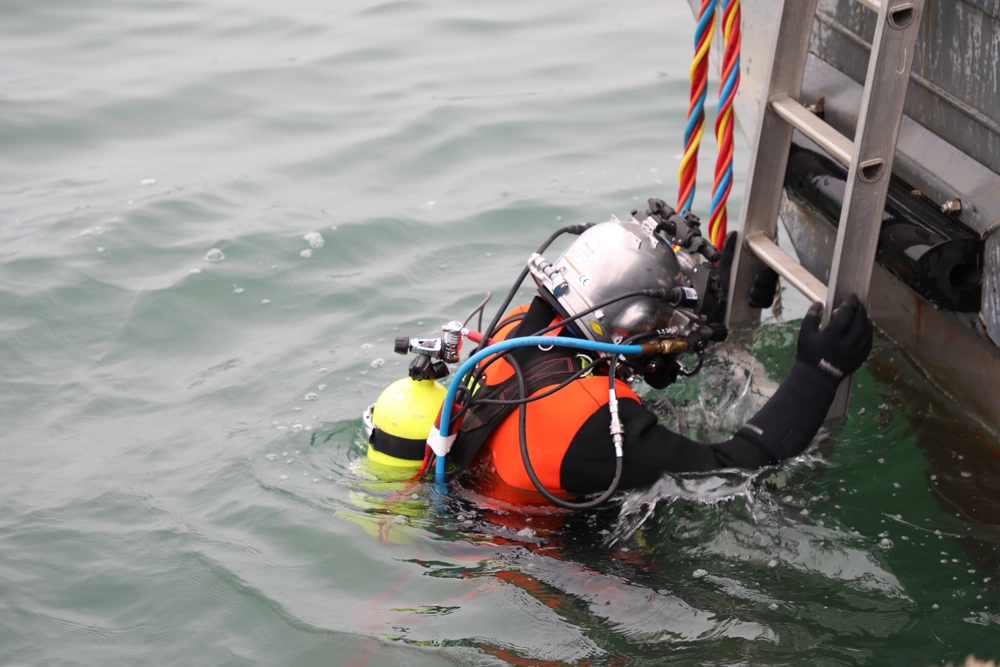
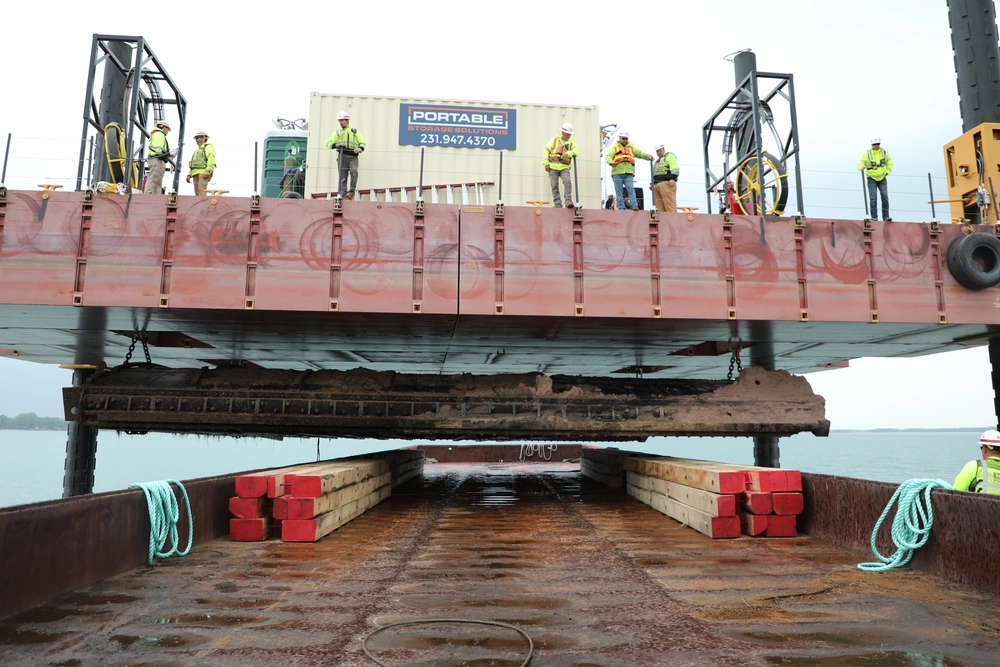
After divers and survey teams located the gates, dredge pumps and a clamshell were used to remove sediment. The Flexifloat SEP was positioned over the gate and the four strand jacks located over the moon pools lifted the 350,000 lb. gate up to the bottom of the SEP while it was floating. The Elevating Spudwells were then used to lift the entire Flexifloat assembly, strand jacks, and gate out of the water so a deck barge could be positioned under the gate. The gate was then lowered onto the deck barge to be transported east of the Soo Locks to be cut up and disposed at a local metal recycling facility.